If you are leaving Apify, the right replacement depends on what you are actually trying to buy. Some buyers want better managed access and compliance. Some want a cheaper no-code path. Some want markdown-first output for AI workflows. Those are different problems.

My shortlist at a glance
| # | Alternative | Best for | Price signal | My take |
|---|---|---|---|---|
| 1 | Bright Data | Managed access, supported scrapers, compliance-sensitive teams | Real funded-account Amazon endpoint captured at $1.50 / 1K records | Best overall replacement when Apify starts feeling too marketplace-dependent and you want a stronger provider stack. |
| 2 | ScrapingBee | Developers who already have parsers and mainly need rendering plus anti-bot help | API-style monthly pricing | Cleaner than a full actor platform when you only want a fetch/render layer. |
| 3 | Octoparse | No-code users and analysts | Free plan plus paid tiers | Better than Apify when the user mainly wants point-and-click extraction instead of an actor ecosystem. |
| 4 | Zyte | Developer teams and Scrapy-oriented stacks | API-first usage pricing | A stronger technical alternative when the team thinks in crawler pipelines and extraction control. |
| 5 | Firecrawl | LLM-ready markdown and AI/RAG workflows | Credit-based plans | A better fit than Apify when the output needs to be AI-ready first, not marketplace-first. |
| 6 | Oxylabs | Enterprise buyers comparing large-scale web-data vendors | Enterprise / API pricing | A credible direct competitor when reliability and enterprise buying process matter more than no-code speed. |
| 7 | Decodo | SMB and mid-market buyers who want easier onboarding than a heavier enterprise stack | Lower-cost proxy and scraping positioning | A practical value option if the buyer mostly wants lower-cost infrastructure. |
| 8 | ScraperAPI | Teams that mainly need unblocker/API support for their own extraction logic | Credit-style API billing | Good when Apify is overkill and the real need is a request/render layer. |
| 9 | PhantomBuster | Light automation and browser-led workflow users | Subscription model | Still useful when the buyer wants practical browser automation more than a scraper marketplace. |
| 10 | ParseHub | Another easy-entry no-code alternative | Free plus paid tiers | Worth considering if the buyer is leaving Apify because the Store is too developer-heavy. |
How I would choose an Apify alternative
The common mistake is comparing every alternative as if they solve the same job. They do not. I would separate buyers into four groups:
- Managed-data buyers: they want the output and a stronger infrastructure/compliance story. Bright Data usually wins here.
- Actor-store buyers: they still value Apify's marketplace model and only want to know whether another ecosystem is better. Many alternatives will feel weaker here.
- No-code buyers: they are comparing Apify against visual tools such as Octoparse or ParseHub, not only against another infrastructure vendor.
- API-layer buyers: they do not want a store at all; they want rendering, anti-bot handling, or extraction support inside their own stack. ScrapingBee, ScraperAPI, and Zyte become more relevant here.
Once you split the buyer by job, the alternatives page becomes much easier to trust. It also becomes much easier to convert, because each pick has a real reason to exist.
Why Bright Data is my strongest Apify alternative right now
Comparison note: Bright Data's free tier is useful when comparing Apify with Bright Data's web-data APIs or Scraper Studio: new accounts get 5,000 monthly credits for that web-data pool, while proxies and Browser API stay separate.
| What I can verify | Why it matters |
|---|---|
| Funded account captured 537 supported domains | This is a stronger supported-target story than a generic “we have many actors” pitch. |
| LinkedIn around 170.8K users and Amazon around 46.1K in Bright Data's ready scraper layer | It proves adoption on two of the most commercially important supported-target surfaces. |
| Real Amazon endpoint priced at $1.50 / 1,000 records in the funded account | It gives buyers a concrete cost anchor instead of another vague “contact sales” impression. |
| Three-layer product ladder: pre-built scrapers, Scraper Studio, managed service | It creates clearer buyer routing than the old one-tool-for-everything story. |
This is why Bright Data is no longer just “another web scraping company” in the context of Apify alternatives. It is a stronger replacement when the buyer wants fewer moving parts, more provider-owned infrastructure, and a cleaner path from supported target to custom target to managed-service handoff.
Stay with Apify or use another Store-first tool if you care more about actor discovery, source-by-source experimentation, and fast no-code testing before you standardize a workflow.
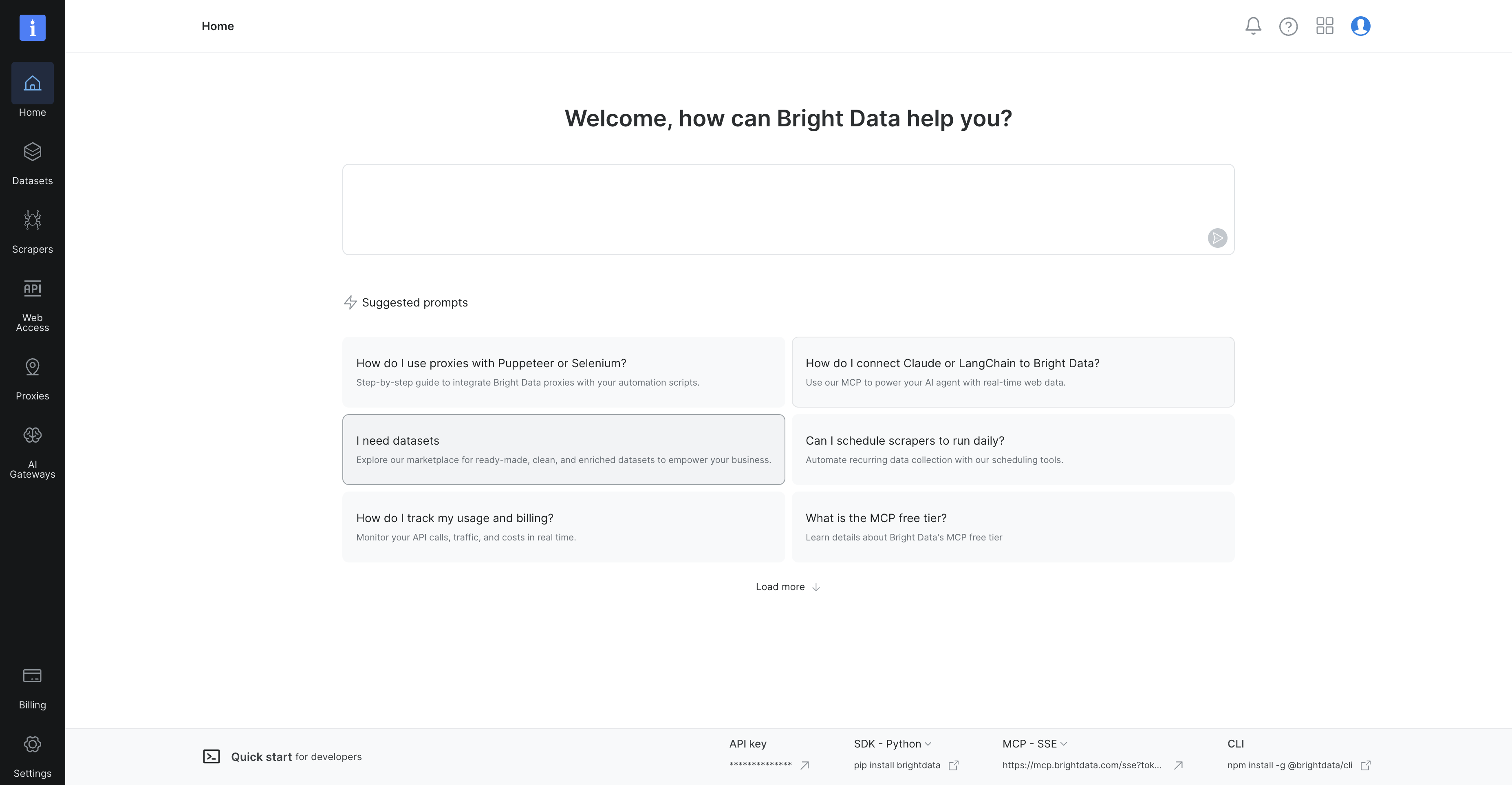 Real funded-account Bright Data evidence matters here because it shows the current scraper stack from inside the product, not only from public marketing pages.
Real proof: why Apify still wins some buyers
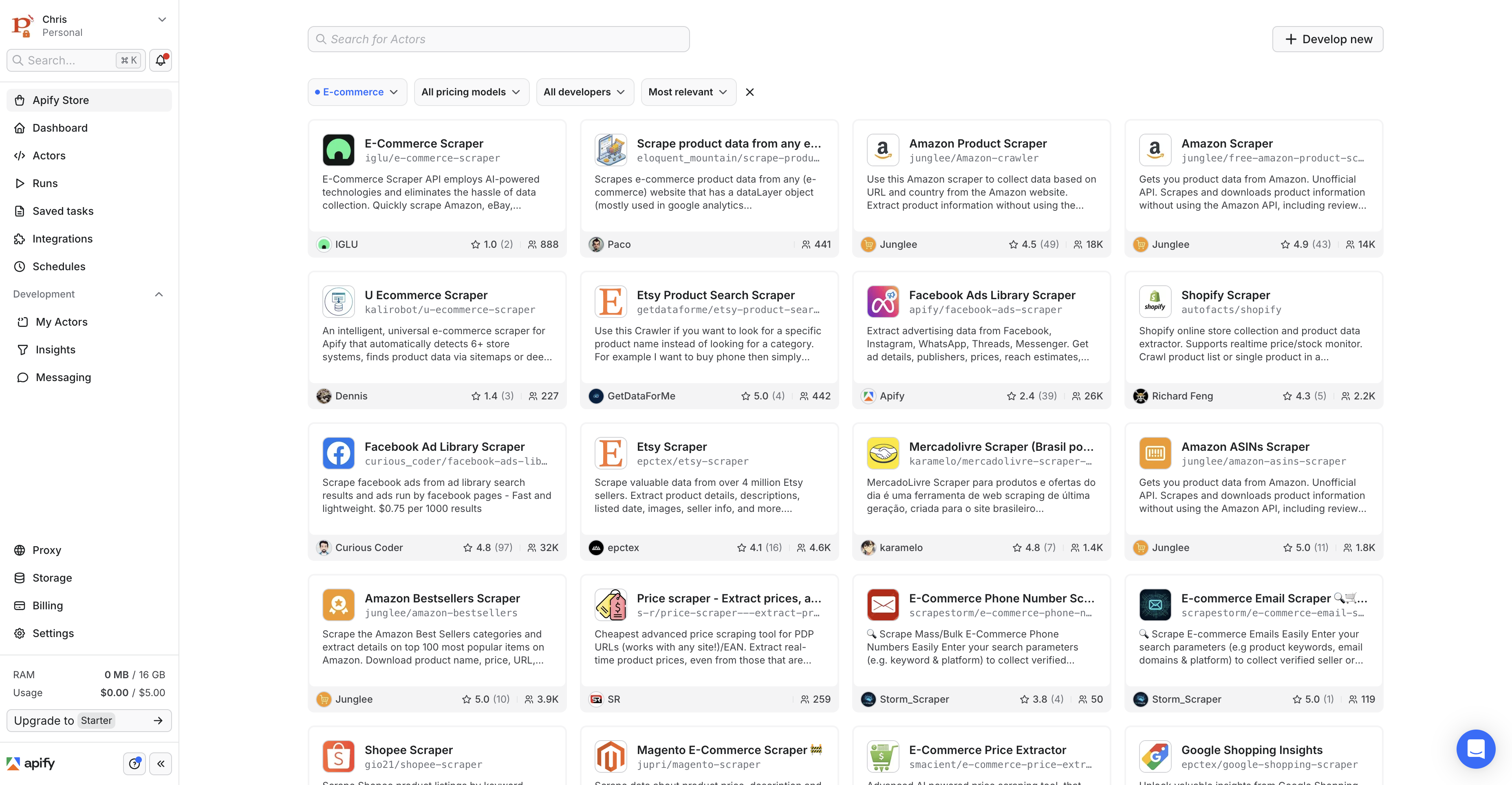
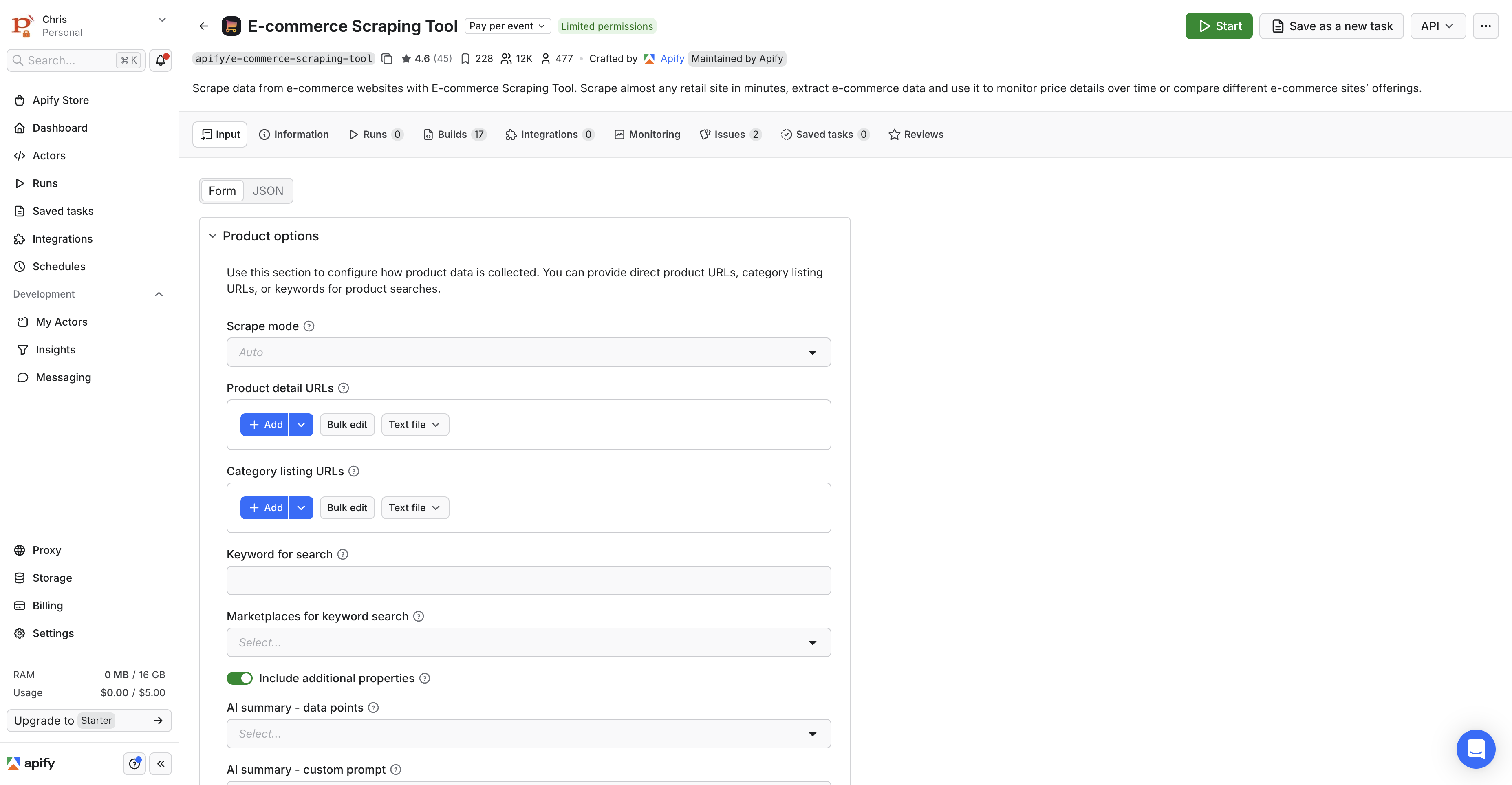
Apify's funded console and live Store still prove the product has a strong center of gravity around actor discovery, creator variety, and source-specific experimentation. That is why I would not tell every buyer to leave it. If the buyer's main joy is trying tools and exploring Store depth, Apify is still hard to beat.
Pricing that actually changes the decision
Public price tables are useful, but the more interesting comparison is the pricing unit that the buyer actually feels first.
| Job | Bright Data signal | Apify signal |
|---|---|---|
| Mainstream supported e-commerce | $1.50 / 1K records on a real Amazon endpoint capture | One Amazon actor around $0.005 / result |
| Google Maps / local business | Strong supported coverage inside one provider stack | Flagship actor around $0.004 / scraped place |
| Instagram-style collection | Supported scraper plus provider-owned stack options | Flagship actor around $0.0027 / result |
| Google Search | Purpose-built search and scraper layers | Flagship actor around $0.0045 / result page |
The important lesson is not “one side is always cheaper.” It is that Apify often feels cheaper when you want to test actors quickly, while Bright Data often feels easier to justify when the buyer wants a more predictable provider-led operating model.
The 10 best Apify alternatives by use case
1. Bright Data
Best for buyers who want managed access, supported scraper coverage, or a stronger provider story than an actor marketplace gives them.
2. ScrapingBee
Best for teams that mostly want an API layer for rendering and anti-bot handling, not a whole actor marketplace.
3. Octoparse
Best for no-code users who are leaving Apify because the Store still feels too developer-oriented.
4. Zyte
Best for developer teams that already think in crawler pipelines and want deeper control around extraction workflows.
5. Firecrawl
Best for AI and RAG builders who care more about clean markdown or LLM-ready output than about the Store model itself.
6. Oxylabs
Best for enterprise buyers who are comparing larger provider-led web-data vendors rather than creator ecosystems.
7. Decodo
Best for buyers who mainly want a lighter, more budget-minded infrastructure alternative.
8. ScraperAPI
Best for developers who already own their parser and only want a cleaner request or unblocker layer.
9. PhantomBuster
Best for lighter automation flows where browser-led actions matter as much as pure structured scraping.
10. ParseHub
Best for users who want an accessible no-code extraction path instead of a Store-and-actor workflow.
Which alternative should you actually pick?
- Pick Bright Data if you want one vendor that can cover supported scrapers, custom targets, and managed service under one roof.
- Pick Octoparse or ParseHub if the real pain is that Apify still feels too technical.
- Pick ScrapingBee or ScraperAPI if the real need is an API layer, not a marketplace.
- Pick Firecrawl if LLM-ready output is the main buying reason.
- Stay with Apify if the Store, creator variety, and actor-level exploration are exactly what you value most.
FAQ
What is the best Apify alternative overall?
For most serious web-data buyers, Bright Data is the strongest overall alternative because it gives a clearer provider-led stack across supported scrapers, custom targets, and managed service.
What is the best no-code alternative to Apify?
If the issue is complexity rather than capability, I would look at Octoparse or ParseHub before another heavier infrastructure vendor.
Should I leave Apify if I only need one actor?
Not necessarily. If one actor already solves the job and the maintenance feels acceptable, staying with Apify can still be the better decision.
When is Bright Data a better replacement than Apify?
When the buyer wants managed access, stronger provider-owned infrastructure, or a cleaner route to production than an actor marketplace usually gives.
See the full Bright Data vs Apify comparison | Compare Web Scraper API vs Scraper Studio | Read the Scraper Studio review | See the e-commerce use case