When I look at AI API gateways, I assume the real risk is attribution and upstream-account management, not just raw connectivity.
Recommendation: I use proxies on AI API gateways only when they answer a narrow QA question: session stability, route separation, regional observation, or cleaner troubleshooting. I do not use them to imply entitlement, billing success, or policy bypass.
June 2026 AI access-layer evidence update
I now separate AI proxy recommendations into two layers: route control for accounts, CLIs, and gateways, and data-access tooling for browser agents or public-web retrieval. That keeps the recommendation from overselling raw IP rotation.
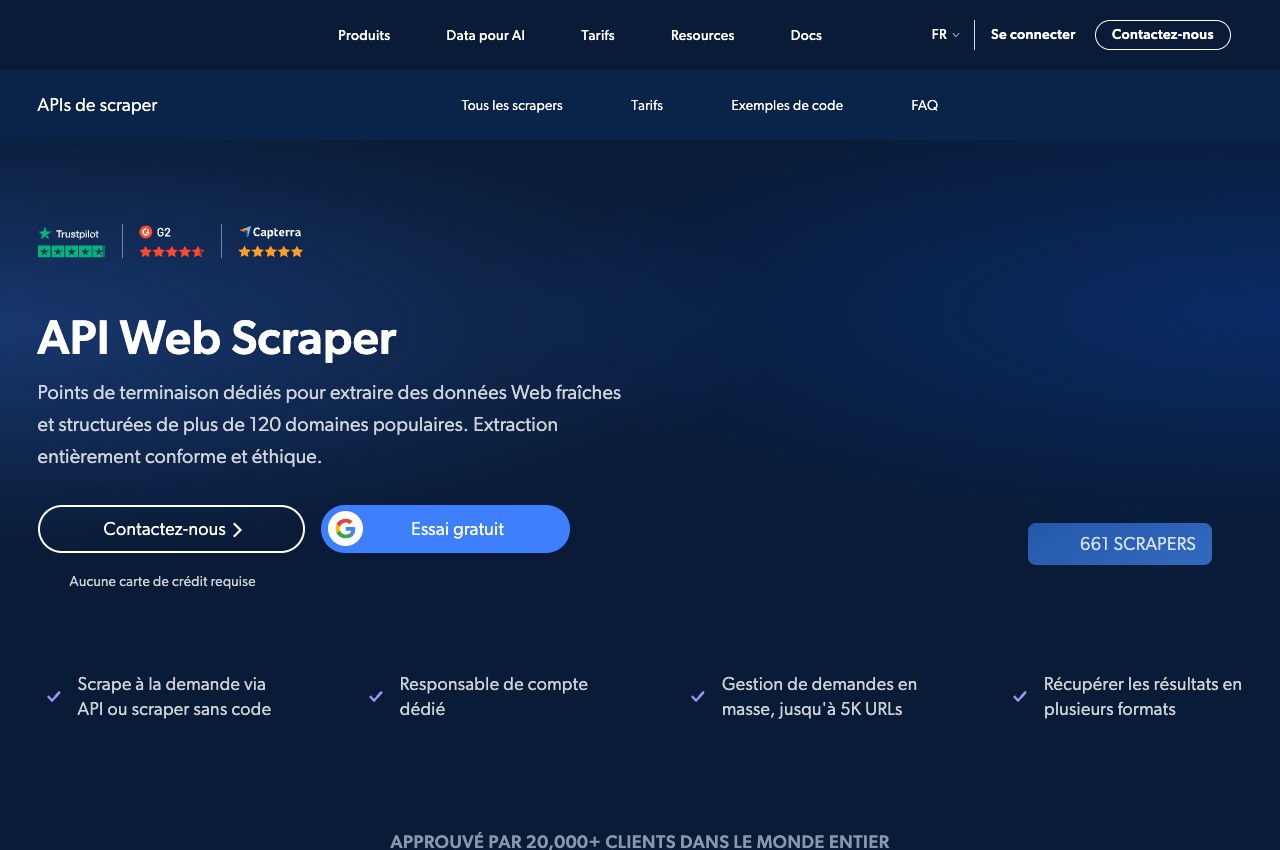
Bright Data is strongest when the workflow may need proxies plus Web Unlocker, SERP API, Browser API, Web Scraper API, or MCP access in one stack. The 2026-07-01 console capture showed the product surface as proxies, web access APIs, scrapers, datasets, and AI gateways rather than a proxy-only storefront.
Apify is the better comparison when the buyer wants a runnable Actor or MCP-connected automation flow. Its Store evidence captured on 2026-07-01 showed high-adoption actors such as compass/crawler-google-places near 486K users, apify/instagram-scraper around 314K users, and apify/google-search-scraper around 145K users.
For CLI and API gateway work, I would use Bright Data-style routing when session stability, country QA, or managed unblocking matters. I would use Apify when the task is really a scraper/automation job that should return structured output instead of only changing egress IP.
| Layer | What the evidence supports | Best fit |
|---|---|---|
| Raw proxy route | Sticky residential, ISP, or datacenter | Account QA, CLI auth stability, gateway admin checks, and regional observation. |
| Managed access layer | Web Unlocker, SERP API, Browser API, MCP, or Actor | Agent browsing, search retrieval, structured extraction, and data collection where raw proxies are not enough. |
Evidence note: Figures above come from logged-in or API-captured Bright Data and Apify evidence dated 2026-07-01. No API tokens, account IDs, billing records, or private screenshots are published here.
Current official baseline I start from
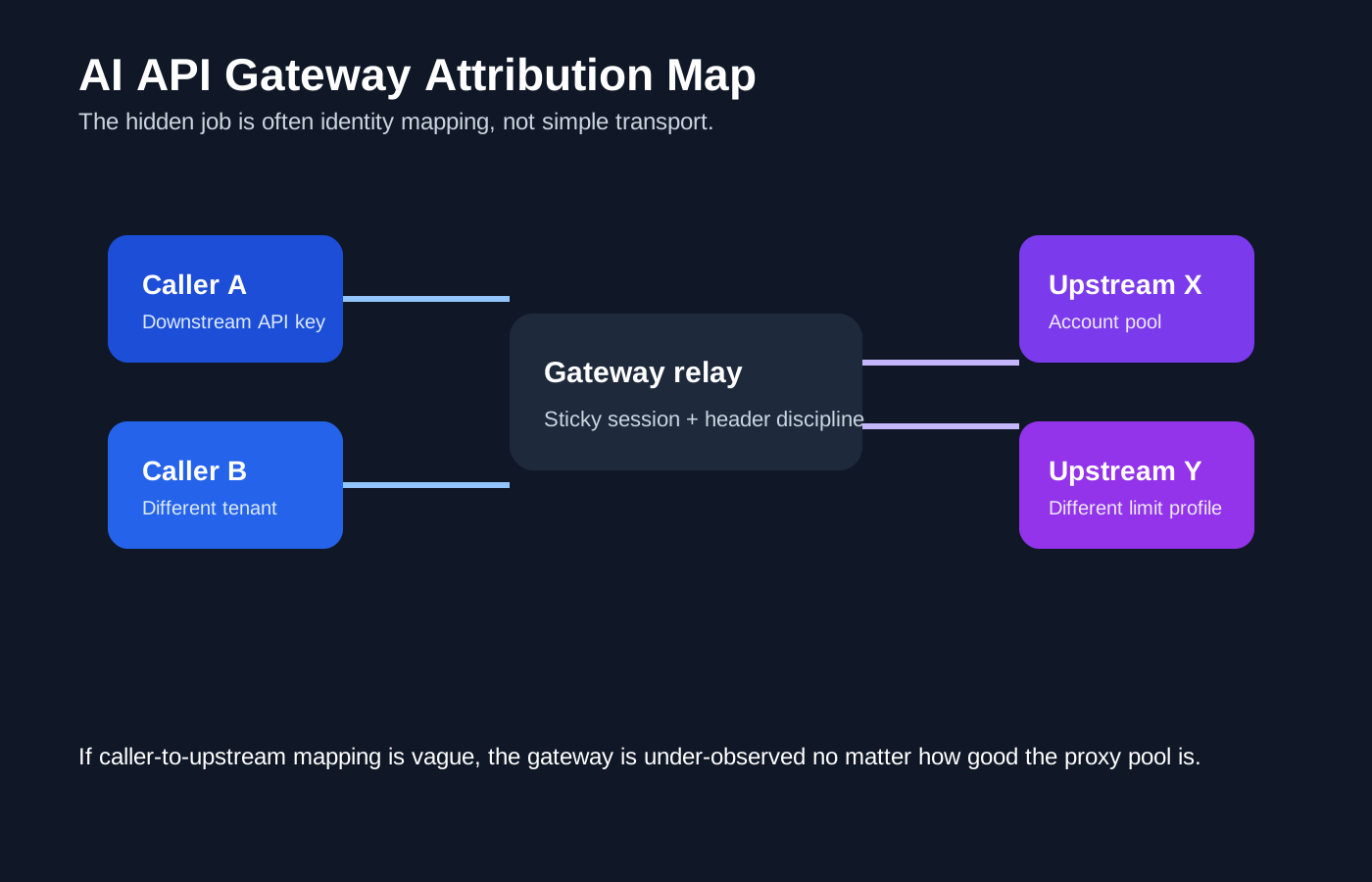
AI API gateways sit between downstream apps and upstream model accounts, keys, or OAuth-backed sessions.
My working read on this surface
The information gap in AI API gateways is that a ‘proxy' is often really an identity-control layer. Once you pool upstream accounts, route sticky sessions, and expose downstream API keys, you are running a policy and attribution system, not just a network hop.
What usually changes the result before the proxy does
The common mistake is assuming AI API gateways are mostly about transport compatibility. They are equally about upstream account hygiene, header discipline, session affinity, and abuse tracing.
What breaks in practice first
- Downstream clients and upstream accounts are not mapped cleanly, so bans or rate limits cannot be traced back to the right actor.
- Sticky-session assumptions are too weak, so one upstream account accidentally serves several downstream identities during a long test window.
- The gateway fixes protocol shape but adds silent cost, attribution, or enforcement risks that the team did not budget for.
What I use the route to observe
- preserve sticky routing between downstream callers and upstream accounts
- separate API users, headers, and quotas inside a gateway layer
- test dashboard, API, and upstream account behavior independently
What I will not promise from a proxy
- They cannot make a subscription-backed gateway risk-free from terms, billing, or abuse controls.
- They cannot fix bad header translation, quota logic, or provider incompatibility in the gateway itself.
- They cannot turn an unsupported upstream auth model into a stable production API without engineering work.
My observation vs claim-to-avoid matrix
| Scenario | Proxy type I prefer | What I am actually observing | Claim I avoid |
|---|---|---|---|
| Direct upstream comparison | Stable datacenter | Whether the upstream API already works before the relay is added | That every failure belongs to the proxy layer |
| Relay dashboard and admin QA | Sticky residential or ISP | Whether the operator panel and account sessions stay attributable | That pooled upstream accounts are low-risk by default |
| Multi-account pooling | Stable datacenter or sticky residential | Whether downstream callers stay mapped to the right upstream identity | That a gateway removes the need for session discipline |
| Country-aware relay observation | Country-specific residential | Whether admin pages or public docs change by market | That one localized view changes provider policy |
When I would use a proxy here
- You are testing sticky routing, downstream attribution, or upstream account pools.
- You need to compare direct mode with relay mode without changing all other variables.
When I would not buy one yet
- You have not yet proven that direct API-key mode works and that the real blocker is relay architecture rather than ordinary auth or model mismatch.
- You cannot yet explain how downstream users, upstream accounts, and sticky routes should map to each other.
My practical QA workflow
- Map downstream callers, upstream accounts, and expected sticky-session behavior before touching the network layer.
- Prove direct upstream access works before introducing the relay or compatibility gateway.
- Test attribution, headers, and account pooling under one stable route before scaling clients.
- Only after that should you explore additional regional or browser-facing behavior around the gateway stack.
Provider shortlist I would start with
| Provider | Best fit for this page | Why I would start here |
|---|---|---|
| Bright Data | Best when AI API gateways also needs dashboard QA, upstream account testing, or public-web access around the relay or gateway layer. | Best overall for production AI workflows, geo QA, and public-web access layers. |
| Proxy-Seller | Useful when AI API gateways mainly needs deterministic session control for relays, operator panels, or upstream account pools. | Strong self-serve option for dedicated or sticky session control at a lower cost. |
| Decodo | Useful when AI API gateways is still mostly self-serve and the operator wants a simpler path than a broader enterprise stack. | Balanced self-serve alternative for data extraction, dashboard access, and lighter automation. |
| Webshare | Useful when AI API gateways is a small-team relay experiment and cost discipline matters more than platform breadth. | Simple lower-friction option for smaller teams testing account separation and gateway routing. |
What I log before I change anything
- Downstream caller identity
- Upstream account or provider
- Sticky-session key
- Header translation or base URL variant
Related AI proxy pages
- AI Proxies
- Best AI Proxy Providers for 2026
- CLI Proxies for AI Coding Tools
- OpenRouter Proxies for 2026
- CLIProxyAPI Proxies for 2026
- Sub2API Proxies for 2026
- OpenAI-Compatible API Proxies for 2026
FAQ
Do I actually need a proxy for AI API gateways?
Only when you need network separation, country-specific QA, gateway routing, or a more stable browser or CLI session than your default path provides.
Which proxy type is the safest default for AI API gateways?
For account or CLI sessions, sticky ISP or static residential is usually the safest default. For broader country QA, rotating residential is more flexible.
What cannot be fixed by a proxy on AI API gateways?
Expired credentials, unsupported countries, missing entitlements, bad project settings, and broken gateway logic are all outside the proxy's control.
Sources checked
- https://github.com/router-for-me/CLIProxyAPI
- https://github.com/Wei-Shaw/sub2api
- https://openrouter.ai/docs/api-keys
- https://brightdata.com/proxy-types
Final verdict
I use proxies on AI API gateways once the underlying surface is clear and the observation goal is narrow. The route can help me isolate state, compare markets, and keep QA repeatable, but it is not a substitute for real entitlements, clean auth, or correct project setup.